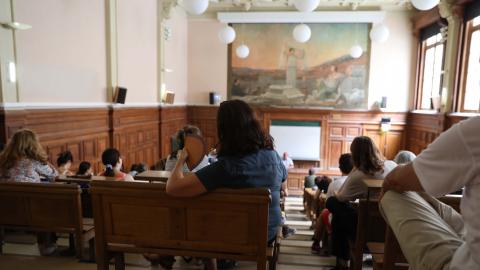
Sorbonne Summer University - Multidisciplinary courses program
The Summer University offers several multidisciplinary courses in different areas of the humanities, in French and English, taught by teacher-researchers from the Sorbonne University community.
The Sorbonne Summer University offers 17 multidisciplinary courses, each focused on key themes: History - Literature - Philosophy - Imaginary of France - Paris - Topical Issues.
Each course includes 15 hours of instruction per week, with 3 hours of classes per day, Monday to Friday.
Courses are offered in both morning and afternoon slots, depending on the cycle.
Participants can register for multiple courses, except during Week 3 (July 15-18).
Due to the national holiday on July 14, the Monday lecture will be rescheduled to another day that week, requiring participants to be available.
During Weeks 1, 2 and 4, participants are free to register for multiple courses.
HISTORY
Courses taught in French.
History serves as a gateway to the past, offering a deep dive into the events, ideas, and figures that have shaped our world. This theme invites you to explore some of humanity's most significant eras, with a particular focus on key milestones in European and French culture. Our course offerings provide a deeper understanding of our shared heritage and the ongoing developments that continue to shape contemporary society.

Course taught in French
Week 1: June 30 to July 4 2025 from 9.30am to 12.30pm
OR
Week 2: July 7 to July 11 2025 from 2pm to 5pm
OR
Week 3: July 15 to July 18 2025 from 2pm to 5pm
- Telling the Past in Ancient Greece: Epic and History
Sébastien Morlet, Greek, Faculty of Arts and Humanities at Sorbonne University - Living Happily: An Introduction to Roman Stoicism
Juliette Dross, Latin language and literature, Faculty of Arts and Humanities at Sorbonne University - Reflection on art in Antiquity andits influence until today
Valérie Naas, Latin language and literature, Faculty of Arts and Humanities at Sorbonne University - The power of speech: Greco-Roman rhetoric and its contemporary extensions
Juliette Dross, Latin language and literature, Faculty of Arts and Humanities at Sorbonne University - Erasmus, Heir of Antiquity
Yann Migoubert, Greek, Faculty of Arts and Humanities at Sorbonne University
Register via Billetweb
The department called « Formation tout au long de la vie (FTLV) » reserves the right to modify the program.
Course taught in French
Week 1: June 30 to July 4 2025 from 2pm to 5pm
OR
Week 2: July 7 to July 11 2025 from 2pm to 5pm
OR
Week 3: July 15 to July 18 2025 from 2pm to 5pm
-
How the French became modern in the 19th century
Arnaud Houte, history, Faculty of Arts and Humanities at Sorbonne University -
Challenges and renewals: changing religion in Europe in19th century
Rémy Heme de Lacotte, history, Faculty of Arts and at Sorbonne University -
State diplomacy in the 19th century, tradition and modernity
Isabelle Dasque, history, Faculty of Arts and Humanities at Sorbonne University -
The Opera Garnier (weeks 1 and 2 only)
Jean-Baptiste Minnaert, history of art, Faculty of Arts and Humanities at Sorbonne University -
Modernity in literature (weeks 1 and 2 only)
Boris Lyon-Caen, French and comparative literature, Faculty of Arts and Humanities at Sorbonne University -
The 19th century and the origins of abstraction. Poetry, art, novel (week 3 only)
Matthieu Vernet, French and comparative literature, Faculty of Arts and Humanities at Sorbonne University -
Music in the 19th century (week 3 only)
Antonin Durand, history, Faculty of Arts and Humanities at Sorbonne University
Register via Billetweb
The department called « Formation tout au long de la vie (FTLV) » reserves the right to modify the program.
Course taught in French
Week 1: June 30 to July 4 2025 from 9.30am to 12.30pm
OR
Week 2: July 7 to July 11 2025 from 9.30am to 12.30pm
OR
Week 3: July 15 to July 18 2025 from 9.30am to 12.30pm
OR
Week 4: July 21 to July 25 2025 from 9.30am to 12.30pm
- Louis Pasteur
Gilles Fumey, geography, Faculty of Arts and Humanities at Sorbonne University - Marie-Antoinette
Gilles Fumey, French and comparative literature, Faculty of Arts and Humanities at Sorbonne University - Victor Hugo (weeks 1 and 2 only)
Boris Lyon-Caen, French and comparative literature, Faculty of Arts and Humanities at Sorbonne University - Marie Curie (weeks 1 and 2 only)
Nathalie Duval, history, Faculty of Arts and Humanities at Sorbonne University - Joséphine Baker (weeks 1 and 2 only)
Nathalie Duval, history, Faculty of Arts and Humanities at Sorbonne University - Charles De Gaulle (week 3 only)
Arnaud Houte, history, Faculty of Arts and Humanities at Sorbonne University - Louis XIV (weeks 3 and 4 only)
Delphine Amstutz, French and comparative literature, Faculty of Arts and Humanities at Sorbonne University - Geneviève de Paris, Jeanne d'Arc and Thérèse de Lisieux: three French saints seen by the 19th and 20th centuries (weeks 3 and 4 only)
Rémy Heme de Lacotte, history, Faculty of Arts and Humanities at Sorbonne University
Register via Billetweb
The department called « Formation tout au long de la vie (FTLV) » reserves the right to modify the program.
Course taught in French
Week 1: June 30 to July 4 2025 from 2pm to 5pm
OR
Week 2: July 7 to July 11 2025 from 2pm to 5pm
OR
Week 3: July 15 to July 18 2025 from 2pm to 5pm
OR
Week 4: July 21 to July 25 2025 from 9.30am to 12.30pm
- The automobile revolution
Alice Milor, history, Faculty of Arts and Humanities at Sorbonne University - A new tourism revolution: an example of the construction of the Greater Paris Metropolis (week 1 only)
Edith Fagnoni, geography, Faculty of Arts and Humanities at Sorbonne University - Women as actors and victims of the French Revolution (weeks 1 and 2 only)
Nathalie Duval, history, Faculty of Arts and Humanities at Sorbonne University - The consumer revolution in contemporary times (weeks 1 and 2 only)
Jean-Pierre Williot, history, Faculty of Arts and Humanities at Sorbonne University - May - June 68 : a French revolution (weeks 1 and 3 only)
Arnaud Houte, history, Faculty of Arts and Humanities at Sorbonne University - When Factories become Heritage: World Recognition for the Nord-Pas-de-Calais mining Basin (week 2 only)
Edith Fagnoni, geography, Faculty of Arts and Humanities at Sorbonne University - The French Revolution (week 2 only)
Jean-François Dunyach, history, Faculty of Arts and Humanities at Sorbonne University - 1848 (weeks 3 and 4 only)
Antonin Durand, history, Faculty of Arts and Humanities at Sorbonne University - The Revolution on the plate: what will we eat in the future? (weeks 3 and 4 only)
Gilles Fumey, geography, Faculty of Arts and Humanities at Sorbonne University - Theater and the French Revolution (weeks 3 and 4 only)
Sophie Marchand, French and comparative literature, Faculty of Arts and Humanities at Sorbonne University
Register via Billetweb
The department called « Formation tout au long de la vie (FTLV) » reserves the right to modify the program.
LITERATURE
Courses taught in French.
Literature is a journey through words, reflecting the thoughts and sensibilities of different ages. This theme invites you to immerse yourself in French literary classics - timeless works that have shaped culture - and explore the many faces of Paris, a boundless source of inspiration for writers. Our courses encourage intellectual curiosity, offering a unique opportunity to rediscover great authors and their works while examining their relevance in today's world.

Course taught in French
Week 1: June 30 to July 4 2025 from 9.30am to 12.30pm
OR
Week 2: July 7 to July 11 2025 from 9.30am to 12.30pm
OR
Week 3: July 15 to July 18 2025 from 9.30am to 12.30pm
OR
Week 4: July 21 to July 25 2025 from 9.30am to 12.30pm
| ↓ June 30 to July 4 2025 from 9.30am to 12.30pm ↓ | ||||
| The 16th century | The 17th century | Le XVIIIe siècle | Le XIXe siècle | Le XXe siècle |
|---|---|---|---|---|
| Women's poetry in 16th-century France: the case of Louise Labbé | La Fontaine and Madame La Fayette: the splendors and tensions of French classicism | Races, colonization, slavery: perspectives and texts from the French Enlightenment (Voltaire, Rousseau, etc.) | Balzac, Eugénie Grandet and Flaubert, Trois Contes | Georges Perec's W ou le souvenir d'enfance; Annie Ernaux's Les Années |
| Adeline Lionetto, French and comparative literature, Faculty of Arts and Humanities at Sorbonne University | Tiphaine Rolland, French and comparative literature, Faculty of Arts and Humanities at Sorbonne University | Stéphanie Géhanne, French and comparative literature, Faculté des Lettres de Sorbonne Université | Christophe Pradeau, French and comparative literature, Faculté des Lettres de Sorbonne Université | Judith Sarfati-Lanter, French and comparative literature, Faculté des Lettres de Sorbonne Université |
| ↓ July 7 to July 11 2025 from 9.30am to 12.30pm ↓ | ||||
| The 16th century | The 17th century | The 18th century | The 19th century | The 20th centuty |
|---|---|---|---|---|
| Rabelais and Pantagruel | La Fontaine, Perrault, Madame d'Aulnoy: The Many Facets of the Tale in the 17th century | Anthropology and Self-Writing: Rousseau, Le Discours sur l'origine et les fondements de l'inégalité and Les Confessions | Stendhal, Le Rouge et le noir (1830); Zola, Les Fortunes de Rougon (1871) | Georges Perec's W ou le souvenir d'enfance; Annie Ernaux's Les Années |
| Paul-Victor Desarbres, French and comparative literature, Faculty of Arts and Humanities at Sorbonne University | Tiphaine Rolland, French and comparative literature, Faculty of Arts and Humanities at Sorbonne University | Jean-Christophe Igalens, French and comparative literature, Faculty of Arts and Humanities at Sorbonne University | Boris Lyon-Caen, French and comparative literature, Faculty of Arts and Humanities at Sorbonne University | Judith Sarfati-Lanter, French and comparative literature, Faculty of Arts and Humanities at Sorbonne University |
| ↓ July 15 to July 18 2025 from 9.30am to 12.30pm ↓ | ||||
| The 16th century | The 17th century | The 18th century | The 19th century | The 20th century |
|---|---|---|---|---|
| Women's poetry in 16th-century France: the case of Louise Labbé | Retz et Sévigné | The modern novel: Marivaux, Le paysan parvenu; Prévost, Histoire d'une grecque moderne | Lamartine | Annie Ernaux and auto-socio-biography. Les Années and Mémoire de fille |
| Adeline Lionetto, French and comparative literature, Faculty of Arts and Humanities at Sorbonne University | Delphine Amstutz, French and comparative literature, Faculty of Arts and Humanities at Sorbonne University | Stéphanie Géhanne, French and comparative literature, Faculty of Arts and Humanities at Sorbonne University | Romain Jalabert, French and comparative literature, Faculty of Arts and Humanities at Sorbonne University | Jean-Christophe Igalens, French and comparative literature, Faculty of Arts and Humanities at Sorbonne University |
| ↓ July 21 to July 25 2025 from 9.30am to 12.30pm ↓ | ||||
| The 16th century | The 17th century | The 18th century | The 19th century | The 20th century |
|---|---|---|---|---|
| Montaigne, Essais | Sévigné et Molière | Races, colonization, slavery: perspectives and texts from the French Enlightenment (Voltaire, Rousseau, etc.) | Rimbaud | The Tragic in Contemporary Theatre: Lagarce, Juste la fin du monde; Wajdi Mouawad, Incendies |
| Alexandre Tarrête, French and comparative literature, Faculty of Arts and Humanities at Sorbonne University | Delphine Amstutz, French and comparative literature, Faculty of Arts and Humanities at Sorbonne University | Stéphanie Géhanne, French and comparative literature, Faculty of Arts and Humanities at Sorbonne University | Romain Jalabert, French and comparative literature, Faculty of Arts and Humanities at Sorbonne University | Sophie Marchand, French and comparative literature, Faculty of Arts and Humanities at Sorbonne University |
Register via Billetweb
The department called « Formation tout au long de la vie (FTLV) » reserves the right to modify the program.
Course taught in French
Week 2: July 7 to July 11 2025 from 2pm to 5pm
- Paris: "A Vast Desert of Men" (from Rousseau to Baudelaire)
Christophe Pradeau, French and comparative literature, Faculty of Arts and Humanities at Sorbonne University - Paris in 17th Century Literature
Tiphaine Rolland, French and comparative literature, Faculty of Arts and Humanities at Sorbonne University - Paris in 18th Century Literature
Jean-Christophe Igalens, French and comparative literature, Faculty of Arts and Humanities at Sorbonne University - Paris: A Stroll with Renaissance Authors
Paul-Victor Desarbres, French and comparative literature, Faculty of Arts and Humanities at Sorbonne University - Paris in 19th Century Literature
Matthieu Vernet, French and comparative literature, Faculty of Arts and Humanities at Sorbonne University
Register via Billetweb
The department called « Formation tout au long de la vie (FTLV) » reserves the right to modify the program.
Course taught in French
Week 1: June 30 to July 4 2025 from 2pm to 5pm
- Places, Sets, and Theatre Machinery in the 17th century
Gaëlle Lafage, Research Engineer, CNRS - Carlo Goldoni and Italian Comedy in the 18th century
Andrea Fabiano, Italian studies, Faculty of Arts and Humanities at Sorbonne University - Why and How to Translate "Classical" Italian Theatre (then and now)?
Lucie Comparini, Italian studies, Faculty of Arts and Humanities at Sorbonne University - An Introduction to the Theatre of Joël Pommerat
Aloysia Rousseau, English studies, Faculty of Arts and Humanities at Sorbonne University - Beckett's Endgame: the Paradoxical Pleasure of the Spectator
Marianne Bouchardon, French and comparative literature, Faculty of Arts and Humanities at Sorbonne University
Register via Billetweb
The department called « Formation tout au long de la vie (FTLV) » reserves the right to modify the program.
PHILOSOPHY
Courses taught in French.
Philosophy challenges us to question the foundations of our thinking and explore the major ideas that have shaped our understanding of the world. This theme dives into important philosophical movements, addressing fundamental questions related to science, humanism, metaphysics, and the evolution of ideas. Alongside this, the study of rhetoric helps students understand the art of discourse—learning how to persuade and analyze arguments. Our course offerings foster intellectual exploration, nurturing critical thinking and deepening our understanding of philosophical and contemporary issues that shape our society.

Course taught in French
Week 1: June 30 to July 4 2025 from 2pm to 5pm
OR
Week 2: July 7 to July 11 2025 from 2pm to 5pm
- The social dimension of science
Cédric Paternotte, philosophy, Faculty of Arts and Humanities at Sorbonne University - Humanism, Transhumanism, Posthumanism
Pierre-Henri Tavoillot, philosophy, Faculty of Arts and Humanities at Sorbonne University - The overcoming of metaphysics (Heidegger)
Vincent Blanchet, philosophy, Faculty of Arts and Humanities at Sorbonne University - Discovering Michel Foucault : A Brief Introduction (week 1 only)
Michel Puech, philosophy, Faculty of Arts and Humanities at Sorbonne University - Should science only describe the world? Logical positivism (week 1 only)
Cédric Paternotte, philosophy, Faculty of Arts and Humanities at Sorbonne University - Logic (week 2 only)
Cédric Paternotte, philosophy, Faculty of Arts and Humanities at Sorbonne University - The Lumières (week 2 only)
Sophie Marchand, French and comparative literature, Faculty of Arts and Humanities at Sorbonne University
Register via Billetweb
The department called « Formation tout au long de la vie (FTLV) » reserves the right to modify the program.
Course taught in French SOLD OUT
Week 1: June 30 to July 4 2025 from 2pm to 5pm
Rhetoric is the art of convincing and persuading through speech. This cycle, which explores rhetoric in all its aspects, deals with substance (content of speech) as well as form (manner of delivery) and articulates theory (rhetorical method) as well as practice (application of this method).
This course requires a very good mastery of french (minimum level C1) and the number of participants in this cycle is limited to 15.
Juliette Dross, Latin language and literature, Faculty of Arts and Humanities at Sorbonne University
Register via Billetweb
The department called « Formation tout au long de la vie (FTLV) » reserves the right to modify the program.
THE IMAGINARY OF FRANCE
Courses taught in French, with the exception of 'The Sorbonne in English', which is taught in English.
This theme invites you to discover the soul of the nation through its symbols, traditions, and iconic figures. It explores the diverse facets of French culture—from gastronomy and fashion to the history of French women and the influence of the legendary Sorbonne. Through these courses, we delve deeply into the rich history of these themes and examine their impact on contemporary culture. It’s a captivating journey that offers a fresh and inspiring perspective on France.

Course taught in English
Week 2: July 7 to July 11 2025 from 9.30am to 12.30pm
OR
Week 3: July 15 to July 18 2025 from 9.30am to 12.30pm
- National memory: history and culture
Yann Migoubert, Greek, Faculty of Arts and Humanities at Sorbonne University - Project management
Yann Migoubert, Greek, Faculty of Arts and Humanities at Sorbonne University - Breathe Better in the City : Public Spaces and Active Mobility. From Paris to Barcelona
Patrizia Ingallina, geography, Faculty of Arts and Humanities at Sorbonne University - The Ethics of Technology in short
Michel Puech, philosophy, Faculty of Arts and Humanities at Sorbonne University - General history of France (week 2 only)
Jean-François Dunyach, history, Faculty of Arts and Humanities at Sorbonne University - From plate to pixel: a brief history of the photographic image (week 2 only)
Jagna Oltarzewska, English language and literature, Faculty of Arts and Humanities at Sorbonne University - Discovering Michel Foucault. A sort introduction (week 3 only)
Michel Puech, philosophy, Faculty of Arts and Humanities at Sorbonne University
Register via Billetweb
The department called « Formation tout au long de la vie (FTLV) » reserves the right to modify the program.
Course taught in French
Week 1: June 30 to July 4 2025 from 2pm to 5pm
OR
Week 2: July 7 to July 11 2025 from 2pm to 5pm
OR
Week 3: July 15 to July 18 2025 from 9.30am to 12.30pm
- French women and diplomacy from modern times to the present day
Isabelle Dasque, history, Faculty of Arts and Humanities at Sorbonne University - Women at work, 19th-20th centuries: an emancipation?
Arnaud Houte, history, Faculty of Arts and Humanities at Sorbonne University - The female body of the 19th century to the present day (weeks 1 and 2 only)
Nathalie Duval, history, Faculty of Arts and Humanities at Sorbonne University - The Parisian between myth and reality (weeks 1 and 2 only)
Nathalie Duval, history, Faculty of Arts and Humanities at Sorbonne University - Young girls in Literary Imagination (weeks 1 and 2 only)
Sophie Marchand, French and comparative literature, Faculty of Arts and Humanities at Sorbonne University - Pioneering Women of the 18th Century (week 3 only)
Sandrine Aragon, Center for the Study of French Language and Literature (CELLF) - The History of Women's Pants (week 3 only)
Pascale Gorguet Ballesteros, Head of the Eighteenth-Century Fashion and Dolls Departments, Palais Galliera, Musée de la Mode de la Ville de Paris - Famous Female Explorers (week 3 only)
Gilles Fumey, geography, Faculty of Arts and Humanities at Sorbonne University
Register via Billetweb
The department called « Formation tout au long de la vie (FTLV) » reserves the right to modify the program.
Course taught in French
Week 1: June 30 to July 4 2025 from 9.30am to 12.30pm
- History of french gastronomy and cuisine (part 1)
Fabien Faugeron, history, Faculty of Arts and Humanities at Sorbonne University - History of french gastronomy and cuisine (part 2)
Fabien Faugeron, history, Faculty of Arts and Humanities at Sorbonne University - Gastronomy, a french exception
Gilles Fumey, geography, Faculty of Arts and Humanities at Sorbonne University - Bread, wine and cheese: cultural bestsellers
Gilles Fumey, geography, Faculty of Arts and Humanities at Sorbonne University - The contemporary consumer revolution
Jean-Pierre Williot, history, Faculty of Arts and Humanities at Sorbonne University
OR
Week 2 (limited to 12 participants): July 7 to July 11 2025 from 9.30am to 12.30pm (course with activities)
- History of french gastronomy and cuisine (part 1)
Fabien Faugeron, history, Faculty of Arts and Humanities at Sorbonne University - History of french gastronomy and cuisine (part 2)
Fabien Faugeron, history, Faculty of Arts and Humanities at Sorbonne University - Gastronomy, a french exception
Gilles Fumey, geography, Faculty of Arts and Humanities at Sorbonne University - Bread, wine and cheese: cultural bestsellers
Gilles Fumey, geography, Faculty of Arts and Humanities at Sorbonne University - The contemporary consumer revolution
Jean-Pierre Williot, history, Faculty of Arts and Humanities at Sorbonne University - Wine and cheese tasting workshop
- Visit to a museum
- Dinner in a restaurant
- Visif of two markets
Register via Billetweb
The department called « Formation tout au long de la vie (FTLV) » reserves the right to modify the program.
Course taught in French
Week 1: June 30 to July 4 2025 from 9.30am to 12.30pm
OR
Week 4: July 21 to July 25 2025 from 14.00pm to 17.00pm
- Geography of Clothing Aroung the World
Gilles Fumey, geography, Faculty of Arts and Humanities at Sorbonne University - When Clothing Symbolizes the Freedom Gained by Women: the History of Women's Fashion and its Constraints (week 1 only)
Sandrine Aragon, Center for the Study of French Language and Literature (CELLF) - Renowned Female Fashion (week 1 only)
Nathalie Duval, history, Faculty of Arts and Humanities at Sorbonne University - Fashion and Literature in the 19th century (week 1 only)
Boris Lyon-Caen, French and comparative literature, Faculty of Arts and Humanities at Sorbonne University - Africa, America, and Asia in Fashion in France, 19th and 20th centuries (week 4 only)
Elodie Vaudry, history of art, Faculty of Arts and Humanities at Sorbonne University - The History of Denim (week 4 only)
Pascale Gorguet Ballesteros, Head of the Eighteenth-Century Fashion and Dolls Departments, Palais Galliera, Musée de la Mode de la Ville de Paris - Fashion in Paris in the 18th century (week 4 only)
Pascale Gorguet Ballesteros, Head of the Eighteenth-Century Fashion and Dolls Departments, Palais Galliera, Musée de la Mode de la Ville de Paris - Theater and fashion from the 17th to the 19th centuries (week 4 only)
Sophie Marchand, French and comparative literature, Faculty of Arts and Humanities at Sorbonne University
Register via Billetweb
The department called « Formation tout au long de la vie (FTLV) » reserves the right to modify the program.
PARIS
Courses taught in French, with the exception of 'A few monuments from Paris', which is taught in English.
Paris, a timeless city of culture and history, stands at the crossroads of ideas and eras, where monuments and stories intertwine to narrate centuries of history. This theme invites you to discover Paris in all its dimensions: a treasure trove of heritage, an endless well of literary inspiration, and a witness to pivotal historical events. Through these courses, we explore the Paris of both stones and words—a fascinating journey that uncovers the lasting impact of the capital across time and cultures.
Course taught in English
Week 2: July 7 to July 11 2025 from 2pm to 5pm
OR
Week 4: July 21 to July 25 2025 from 2pm to 5pm
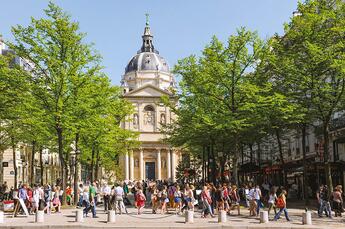
- The Sorbonne
Yann Migoubert, Greek, Faculty of Arts and Humanities at Sorbonne University - The Opéra Garnier
Jean-Baptiste Minnaert, history of art, Faculty of Arts and Humanities at Sorbonne University - From the royal Louvre to the republican Concorde, a thousand years of history (week 2 only)
Jean-François Dunyach, history, Faculty of Arts and Humanities at Sorbonne University - The Latin Quarter (week 2 only)
Jean-François Dunyach, history, Faculty of Arts and Humanities at Sorbonne University - Department stores: La Samaritaine (week 4 only)
Jean-Baptiste Minnaert, history of art, Faculty of Arts and Humanities at Sorbonne University
Register via Billetweb
The department called « Formation tout au long de la vie (FTLV) » reserves the right to modify the program.
Course taught in French
Week 1: June 30 to July 4 2025 from 9.30am to 12.30pm
OR
Week 2: July 7 to July 11 2025 from 9.30am to 12.30pm
OR
Week 4: July 21 to July 25 2025 from 9.30am to 12.30pm
- Les Halles
Reynald Abad, history, Faculty of Arts and Humanities at Sorbonne University - La Sorbonne
Reynald Abad, history, Faculty of Arts and Humanities at Sorbonne University - The Louvre and its territories: advancing towards an XXL Louvre (week 1)
Edith Fagnoni, geography, Faculty of Arts and Humanities at Sorbonne University - The Eiffel Tower (weeks 1 and 2 only)
Arnaud Houte, history, Faculty of Arts and Humanities at Sorbonne University - Department stores (weeks 1 and 2 only)
Jean-Baptiste Minnaert, history of art, Faculty of Arts and Humanities at Sorbonne University - Notre-Dame (week 2 only)
Dany Sandron, history of art, Faculty of Arts and Humanities at Sorbonne University - The Latin Quarter (week 4 only)
Jean-François Dunyach, history, Faculty of Arts and Humanities at Sorbonne University - The Arc de Triomphe (week 4 only)
Antonin Durand, history, Faculty of Arts and Humanities at Sorbonne University - Le Louvre (week 4 only)
Gilles Fumey, geography, Faculty of Arts and Humanities at Sorbonne University - Discovering the Sundials of Paris (week 2 only)
Alain Redding, Head of the Astronomy Department at the Palais de la Découverte -
Les Halles (weeks 1 ans 4 only)
Reynald Abad, history, Faculty of Arts and Humanities at Sorbonne University
Register via Billetweb
The department called « Formation tout au long de la vie (FTLV) » reserves the right to modify the program.
Course taught in French
Week 2: July 7 to July 11 2025 from 2pm to 5pm
- Paris: "A Vast Desert of Men" (from Rousseau to Baudelaire)
Christophe Pradeau, French and comparative literature, Faculty of Arts and Humanities at Sorbonne University - Paris in 17th Century Literature
Tiphaine Rolland, French and comparative literature, Faculty of Arts and Humanities at Sorbonne University - Paris in 18th Century Literature
Jean-Christophe Igalens, French and comparative literature, Faculty of Arts and Humanities at Sorbonne University - Paris: A Stroll with Renaissance Authors
Paul-Victor Desarbres, French and comparative literature, Faculty of Arts and Humanities at Sorbonne University - Paris in 19th Century Literature
Matthieu Vernet, French and comparative literature, Faculty of Arts and Humanities at Sorbonne University
Register via Billetweb
The department called « Formation tout au long de la vie (FTLV) » reserves the right to modify the program.
TOPICAL ISSUES
Courses taught in French.
Current affairs are at the heart of the challenges shaping our contemporary world. This theme invites you to examine the major issues of our time, from climate change to advances in artificial intelligence. Through these courses, we trace the evolution of thought, analyzing the ethical, social, and environmental dilemmas they present. This thought-provoking exploration fosters collective awareness and encourages us to anticipate the profound transformations that will reshape our future society.

Course taught in French
Week 4: July 21 to July 25 2025 from 9.30am to 12.30pm
- Breathing Easier in the City: Public Space and Active Mobility in Paris - A Controversial Approach
Patrizia Ingalline, geography, Faculty of Arts and Humanities at Sorbonne University - History of the environment
Nestor Herran, history of sciences, Faculty of Arts and Humanities at Sorbonne University - The fathers of ecology: from Humboldt to Haeckel
Gilles Fumey, geography, Faculty of Arts and Humanities at Sorbonne University - Energy companies and climate change
Yves Bouvier, history, Faculty of Arts and Humanities at Sorbonne University - To be announced
-, Faculty of Arts and Humanities at Sorbonne University
Register via Billetweb
The department called « Formation tout au long de la vie (FTLV) » reserves the right to modify the program.
Course taught in French
Week 2: July 7 to July 11 2025 from 9.30am to 12.30pm
OR
Week 4: July 21 to July 25 2025 from 9.30am to 12.30pm
- The historical challenges of artificial intelligence
Benjamin Thierry, history, Faculty of Arts and Humanities at Sorbonne University - The ethics of Artificial Intelligence
Adrien Tallent, philosophy, Faculty of Arts and Humanities at Sorbonne University - Philosophical genealogy of Artificial Intelligence
Adrien Tallent, philosophy, Faculty of Arts and Humanities at Sorbonne University - The Relational Challenges of Artificial Intelligence
Clotilde Chevet, Project Manager at the Sorbonne Center for Artificial Intelligence (SCAI), Faculty of Arts and Humanities at Sorbonne University - Networking the world. From Arpanet to Tiktok, a history of the Internet from the 1960s to today
Benjamin Thierry, history, Faculty of Arts and Humanities at Sorbonne University
Register via Billetweb
The department called « Formation tout au long de la vie (FTLV) » reserves the right to modify the program.